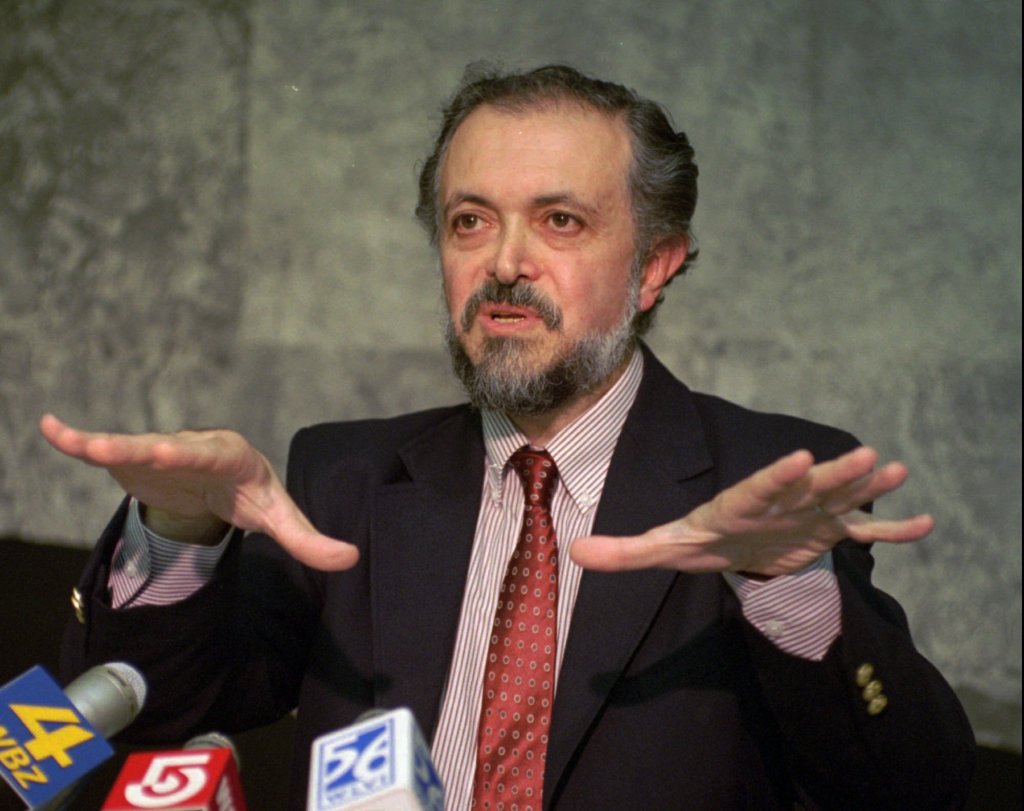
Dr. Mario Molina was a Mexican-American chemist who made significant contributions to our understanding of the chemistry of the Earth’s atmosphere. Here are some key points about him:
Dr. Molina was born on March 19, 1943, in Mexico City, Mexico.
He earned his bachelor’s degree in chemical engineering from the National Autonomous University of Mexico and then went on to receive his PhD in physical chemistry from the University of California, Berkeley.
In 1974, Dr. Molina and his colleague, F. Sherwood Rowland, published a groundbreaking study in the journal Nature that showed how chlorofluorocarbons (CFCs) could destroy the ozone layer in the atmosphere.
Their work led to the 1987 Montreal Protocol, an international treaty aimed at phasing out the production and use of CFCs.
In 1995, Dr. Molina was awarded the Nobel Prize in Chemistry, along with Rowland and Dutch chemist Paul J. Crutzen, for their work on atmospheric chemistry.
Dr. Molina also served as a professor of chemistry and biochemistry at the University of California, San Diego, and as a professor of earth, atmospheric, and planetary sciences at the Massachusetts Institute of Technology.
He was a vocal advocate for scientific research and environmental conservation, and he received numerous awards and honors throughout his career.
Overall, Dr. Mario Molina was a pioneering chemist who helped us better understand the chemistry of the Earth’s atmosphere and how human activity can impact it. His work has had a lasting impact on environmental policy and continues to influence research in atmospheric chemistry today.
 Action Health Success